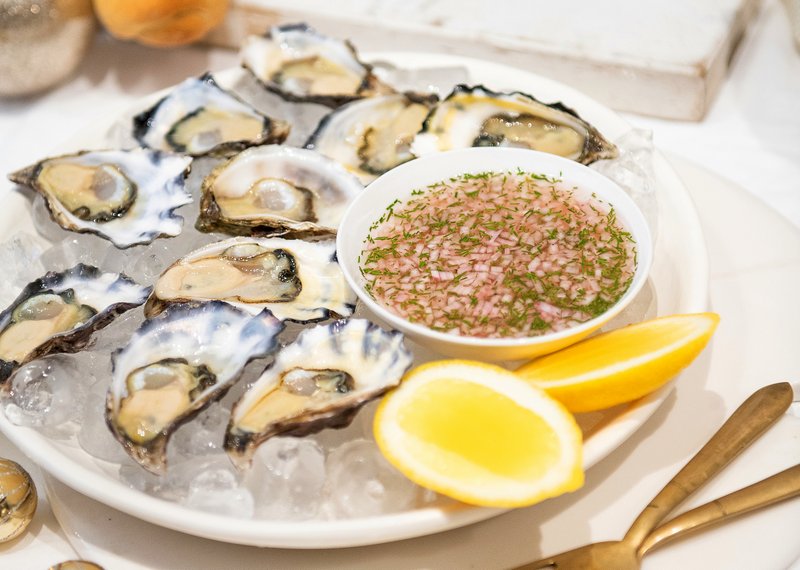
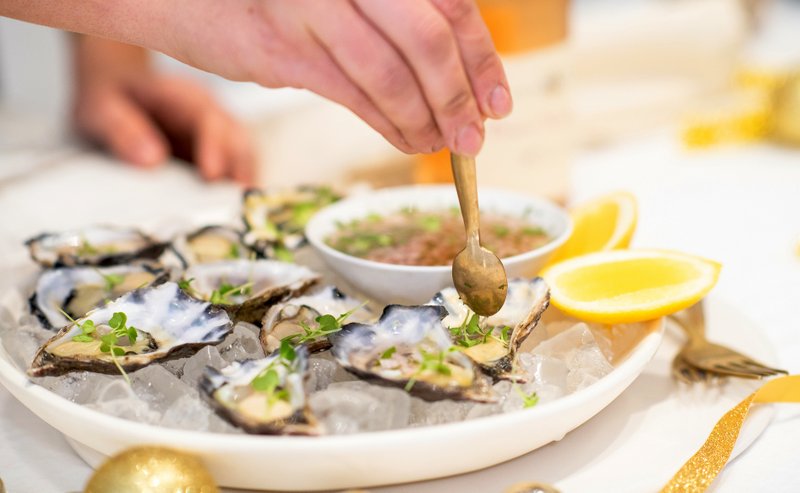
Are oysters good for you? Absolutely—these ocean gems are rich in essential nutrients and long hailed for their romantic reputation. Brimming with zinc, oysters support testosterone production and may help enhance libido, making them a natural contender on any list of aphrodisiac foods. While you could pop a zinc supplement, wouldn’t you rather enjoy it freshly shucked and topped with an effortless rosé mignonette? Dive into the recipe below and experience this irresistible pairing that’s as good for your health as it is for your palate.

Are Oysters Good for You? Let’s Shuck Into It

Oysters tend to divide the table—people either crave them or can’t bear the thought. There’s rarely any middle ground. As for me? I dream of sitting at a white linen-covered table floating on the ocean, savouring oysters so fresh they’re shucked before my eyes. Whether they’re good for me or not is irrelevant—I’ll eat them anyway.

The Health Benefits of Oysters: More Than Just an Aphrodisiac

Yes, oysters are packed with nutrients. High in zinc, they’re often praised for their potential to boost libido and support immune function. But health benefits aside, for many of us, oysters are all about the experience—briny, velvety, and kissed by the sea.

Please Don’t Drown My Oysters

When it comes to toppings, I’m a purist. Please don’t offer me oysters smothered in cheese, chilli, or garlic—why mask that beautiful ocean essence? That said, I’ll make a nostalgic exception for Oysters Kilpatrick, a retro classic that still earns its place on the plate.

A New York Oyster Moment to Remember

My most memorable oyster moment? It has to be the Grand Central Oyster Bar  in New York’s Grand Central Terminal. For over a century, they’ve been serving what they claim are the freshest oysters in the city. One name on the menu stood out: Ride a Naked Cowboy. When I asked the waitress if I’d like it, she answered in a Southern drawl, “Honey, who doesn’t like to ride a naked cowboy?” I’ll never forget that.

Best oysters in Australia - Lease 65, St Helens, Tasmania

Where to Eat the Best Oysters in Australia

Australia is a seafood-lover’s paradise, and when it comes to oysters, the country shucks and shines. From cool Tasmanian waters to Queensland’s sun-drenched bays, here’s your state-by-state guide to the best oyster experiences in Australia—plus a few personal favourites you won’t want to miss.

Tasmania: Cold Waters, Bold Flavours

Tasmania is considered the holy grail of oyster cultivation in Australia. The island state’s pristine, icy waters create the perfect environment for oysters to grow slowly and develop complex, clean, and briny profiles. The most common variety here is the Pacific Oyster, but Tasmania’s producers have perfected their art, earning international recognition for quality and sustainability.

Tasmania’s east coast is dotted with working oyster farms, many of which offer farm-to-table tasting experiences. You’ll find plenty of great oyster stops in this oyster lover’s guide to Tasmania’s East Coast. From the tranquil leases of St Helens to the crystal-clear bays of Coles Bay, oysters here are grown with a deep respect for the environment. Oysters from Lease 65, for instance, are harvested from the Georges Bay lease and shucked just metres from the water.

Don’t miss a visit to Get Shucked on Bruny Island, where oysters are shucked to order and served from a caravan perched above the lease. Or hop aboard the Tasmanian Seafood Cruise, where you can taste oysters straight from the ocean floor during a luxurious day on the water. Tasmania is also the perfect setting for a gourmet road trip—driving along the east coast and sampling oysters at every stop or Tasmanian crayfish.

Queensland: Tropical Vibes, Emerging Oyster Scene

Queensland’s oyster industry is smaller than its southern counterparts but growing steadily, thanks to innovative aquaculture and clean, warm waters along the state’s southern coastline. The region produces both Sydney Rock Oysters and Pacific Oysters, with Moreton Bay being the heart of the Queensland oyster story.

The Moreton Bay region is home to a new wave of oyster growers using sustainable practices to produce creamy, delicately flavoured oysters. These oysters tend to be softer and sweeter due to the warmer waters, offering a more approachable taste for newcomers.

Experiences like the Champagne and Oyster Cruise in Moreton Bay combine local seafood with a luxury boating adventure, while events like the Stradbroke Island Oyster Festival celebrate Queensland’s coastal harvest with live music, beachfront bars, and, of course, mountains of oysters.

Queensland’s industry is still evolving, but it’s a region to watch—and one to enjoy while it’s still under the radar.

New South Wales: Sydney Rock Stars

NSW is Australia’s oyster powerhouse, producing the iconic Sydney Rock Oyster, a native species prized for its deep, rich, almost nutty flavour. These oysters are grown in estuarine environments along the state’s extensive coastline, with notable regions including the Hawkesbury River, Pambula, Port Stephens, and the Sapphire Coast.

NSW growers are among the most experienced in the country, many of them multi-generational oyster farmers who’ve worked the tides for decades. The oysters mature slowly, absorbing the unique characteristics of each estuary. This is what gives Sydney Rock Oysters their renowned terroir—or “merroir”—with flavour nuances that shift from sweet and creamy to complex and briny, depending on their origin.

For an immersive experience, visitors can take an oyster farm tour in Mooney Mooney, shuck their own oysters in Pambula, or sit back and sample curated selections at the Sydney Fish Market. NSW is also home to world-class oyster eateries where the provenance of every shell is celebrated.

Victoria: Cool-Climate Brilliance

Victoria’s oyster industry is smaller and more boutique but deeply appreciated for the clean, mineral-forward profile of its harvest. The Gippsland Lakes and areas around Port Phillip Bay are key oyster-growing zones, with a focus on both Pacific and Sydney Rock varieties.

The cooler southern waters and carefully managed leases produce oysters with a delicate salinity and crisp finish, making them a hit with fine diners. Many are snapped up by Melbourne’s high-end restaurants, but regional oyster lovers can enjoy them at local producers or farmers’ markets.

In Metung, you can cruise the Gippsland Lakes and sample oysters aboard a hot springs and tasting boat. Or head to Portarlington, where local mussels and oysters are served fresh from the jetty at the Little Mussel Café. Victoria may not be Australia’s largest oyster producer, but it offers some of the country’s most curated and intimate oyster experiences.

South Australia: The Iconic Coffin Bay

South Australia’s Coffin Bay oysters are world-famous—and for good reason. The cold, nutrient-rich waters of the Eyre Peninsula create oysters with a meaty texture, bright brininess, and clean finish. These oysters have become a culinary icon and are often exported internationally.

Coffin Bay offers arguably the most immersive oyster experience in Australia. Visitors can don waders and wade into the leases for an in-water tasting, eating oysters plucked straight from the racks while standing knee-deep in the bay.

Beyond Coffin Bay, the Limestone Coast and Kangaroo Island also produce premium oysters. These southern regions prioritise quality, environmental care, and a paddock-to-plate philosophy. Whether you’re dining at the 1802 Oyster Bar in Coffin Bay or pairing oysters with local wine at an Adelaide restaurant, South Australia is an essential stop for serious shellfish lovers.

Western Australia: Remote and Rewarding

WA’s vast and wild coastline makes oyster farming a challenge—but also a unique opportunity. In the south around Albany, you’ll find boutique oyster farms producing small batches of exceptionally clean, mineral-rich oysters.

These oysters are grown in cooler waters that mirror the southern ocean’s unspoiled character. While production is more limited than in other states, WA oysters are treasured for their purity and rarity.

Most WA-grown oysters are snapped up by premium restaurants in Perth or served at small local venues like Island Market at Trigg Beach, where local seafood is heroed with flair. While WA might not be the first state you associate with oysters, it’s an emerging frontier for fans looking for something a little different.

Northern Territory: Tropical and Rare

The Northern Territory is new to the oyster game, but there’s excitement brewing around its potential. The Darwin Aquaculture Centre is pioneering research into native oyster species and sustainable tropical farming methods.

While the industry is still in early development, there’s a growing appreciation for the unique environment of the Top End and its potential to yield distinct oyster varieties with tropical flavour profiles.

Fine dining restaurants like Pee Wee’s at the Point occasionally feature local oysters when available, giving a taste of what the future might hold for oyster cultivation in the north.

best oysters in Australia -Freshly shucked oysters with mango hot sauce,

10 things you didn’t know about oysters and why oysters are good for you

  1. Don’t use a fork to eat an oyster! Pick up the shell and slurp it from the wide end.  Make sure you chew it a little to release the flavour in your mouth. Some say the proper way is just to let the oyster slide down your throat, but that’s just a waste and a bad urban legend.
  2. Even though they are the same species, Moreton Bay Rock Oysters are different to Sydney Rock Oysters because the flavour comes from the waters in which the oysters grow. Experts describe Moreton Bay oysters as salty with a sweet aftertaste.  They say this is due to the high-quality water of Moreton Bay, where there is no rainfall runoff.
  3. Oysters are grown from spat (nothing to do with spit) and normally take six months to reach 25 to 30 mm wide.
  4. Spring is a great time to enjoy oysters as they are nice and plump, while in warm summer weather, oysters spawn, giving them a creamy taste.
  5. Will eating oysters improve your sex life?  Oysters are loaded with zinc, a mineral that helps the body make testosterone, which is important for libido function. You can eat oysters or take a zinc tablet – I know what I would rather do!
  6. Oysters often start out as males and end up as females.
  7. Recycle your oyster shells in the garden because they are full of calcium, which will make your garden grow. First, ensure no meaty bits are left, or that will create a smelly problem.  Pounding them up a bit might help too!
  8. Do not eat oysters that have been sitting in the sun. Seafood is always touchy, and oysters are no different.  Keep them cold and eat them fresh.
  9. Oysters filter up to 200 litres of water a day.  That’s why you want to eat oysters that are grown in pure, clean waters.
  10. People have been eating oysters since prehistoric times. During the Roman Empire, they also worked out how to cultivate them.

While I’m saving up to enjoy an oyster farm experience, take a look at the oyster rosé dressing developed by cook, food stylist and Great Australian Bake Off winner Sian Redgrave for Cellarmasters.
Great Eastern Wine Week, Tasmania
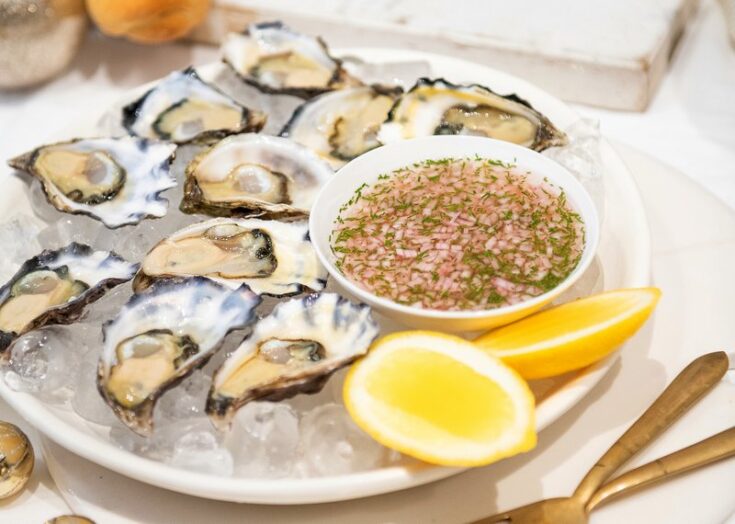
Oysters with Rosé Mignonette
Yield: 24 oysters

Oysters with Rosé Mignonette Dressing

Prep Time: 10 minutes
Total Time: 10 minutes

It's easy to dress up natural oysters with a tasty dressing. These oysters are a great way to start off a festive lunch or dinner, but equally good as finger food for a crowd.  So easy to eat, serve Oysters with Rosé Mignonette Dressing at your next gathering and stand back to receive compliments.

Ingredients

  • 1/2 cup dry Rosé like Louis Chavy Pinot Noir Rosé
  • 2 French shallots, finely diced
  • 1 tablespoon chardonnay vinegar
  • Freshly ground black pepper
  • 2 teaspoons finely chopped dill
  • 24 oysters or more

Instructions

    • Mix all of the ingredients together to form the mignonette in a bowl.
    • Serve with freshly shucked oysters on ice.
    • Enjoy with a glass of the Rosé

    Nutrition Information:

    Yield:

    24

    Serving Size:

    1

    Amount Per Serving: Calories: 58Total Fat: 1gSaturated Fat: 0gTrans Fat: 0gUnsaturated Fat: 1gCholesterol: 25mgSodium: 54mgCarbohydrates: 4gFiber: 0gSugar: 1gProtein: 5g

    Eatdrinkandbekerry.net offers nutritional information for recipes contained on this site. This information is provided as a courtesy and is an estimate only.